
Restaurant Construction Cost Per Square Foot in 2026
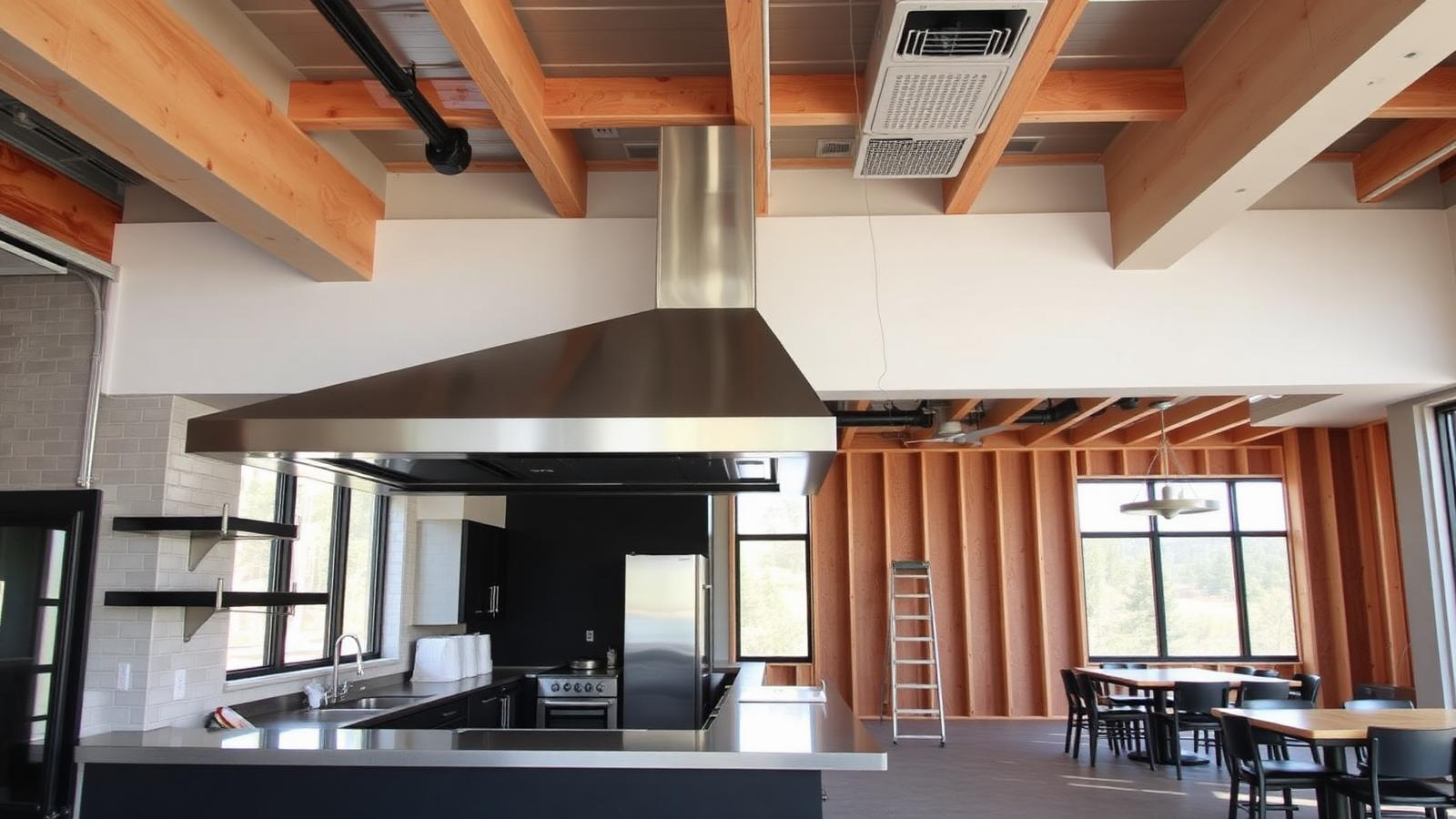
Restaurant construction is the most MEP-driven category of commercial work. Kitchen exhaust, refrigeration, gas, grease management, and health-department-specific finishes can double a number that looked reasonable on a napkin. Here are 2026 restaurant construction cost benchmarks by type, plus where the budget really goes.
2026 Restaurant Construction PSF Benchmarks
| Restaurant type | Typical PSF (2026) |
|---|---|
| Ghost kitchen / commissary | $275 – $450 |
| QSR (quick-service) | $325 – $525 |
| Fast-casual | $375 – $625 |
| Full-service casual | $425 – $725 |
| Full-service upscale / chef-driven | $550 – $900+ |
| Bar-forward / craft brewery taproom | $400 – $700 |
Included: GC fee, general conditions, insurance, bonds, all subcontractor scope. Not included: kitchen equipment (FF&E), POS, signage, smallwares, design fees.
Where the Money Actually Goes
For a typical fast-casual restaurant, construction cost roughly distributes:
- Kitchen MEP (hood, fire suppression, refrigeration, gas, water, grease, electrical): 28–38%
- Front-of-house finishes (millwork, flooring, ceiling, lighting): 18–28%
- Bathrooms, ADA, accessibility: 6–10%
- HVAC and exhaust make-up air: 10–14%
- Plumbing (excluding kitchen): 4–8%
- Electrical (excluding kitchen): 6–10%
- Building shell upgrades (if any): 0–15%
If you cut kitchen scope, you cut the largest line item — but you also cut what the brand actually is.
What Drives the Number
Hood and make-up air
Hood size, CFM, and the make-up air strategy drive a chain reaction through HVAC, electrical, and the roof. A bigger hood is almost never just a "bigger hood."
Gas service
Existing buildings rarely have the gas service a real kitchen needs. Service upsizes are weeks of utility coordination on top of construction time.
Grease management
Interceptors (interior or exterior) are AHJ-prescribed. Exterior interceptors mean site work, paving, and often easement coordination.
Health-department finishes
FRP, integral coved base, smooth ceilings, hand-sink placement, and ware-washing layouts are health-code-driven. Designing without code fluency triggers redesign at plan check.
Lease vs. ground-up
A second-generation restaurant space is the cheapest path if the prior kitchen layout matches. Conversions from retail or office to restaurant trigger gas, HVAC, grease, and electrical upgrades that erase savings.
Brand fixtures and FF&E
Brand-supplied tables, chairs, lighting, and AV are usually owner cost but their lead times drive your opening date. Coordinate procurement at DD.
Restaurant Construction Timeline
| Phase | Duration |
|---|---|
| Preconstruction / design | 8–14 weeks |
| Permitting | 4–10 weeks (AHJ-dependent) |
| Construction | 12–22 weeks |
| Inspections & opening | 2–3 weeks |
| Total | 6–11 months |
Where Owners Save Money
- Lock kitchen equipment selections at DD — drives MEP design.
- Pre-negotiate landlord vs. tenant scope in the lease (gas service, grease, hood penetration).
- Use design-build to overlap kitchen design and construction.
- Standardize prototype across locations if running multiple stores.
Where Owners Lose Money
- Signing a lease before AHJ feasibility on hood, grease, or gas
- Late equipment changes after permit
- Underestimating utility service upgrade durations
- Selecting a GC without restaurant experience
Related Reading
- Hiring a restaurant general contractor: 9 questions to ask
- Commercial construction cost per square foot
- Multi-site retail rollout
Get a Restaurant Construction Estimate
We deliver QSR, fast-casual, full-service, and bar-forward restaurant construction for national brands and franchise operators across the Western U.S. Request preconstruction — we will return a defensible PSF range and schedule within five business days.