Healthcare Construction Project Management: A Hospital Owner's Guide
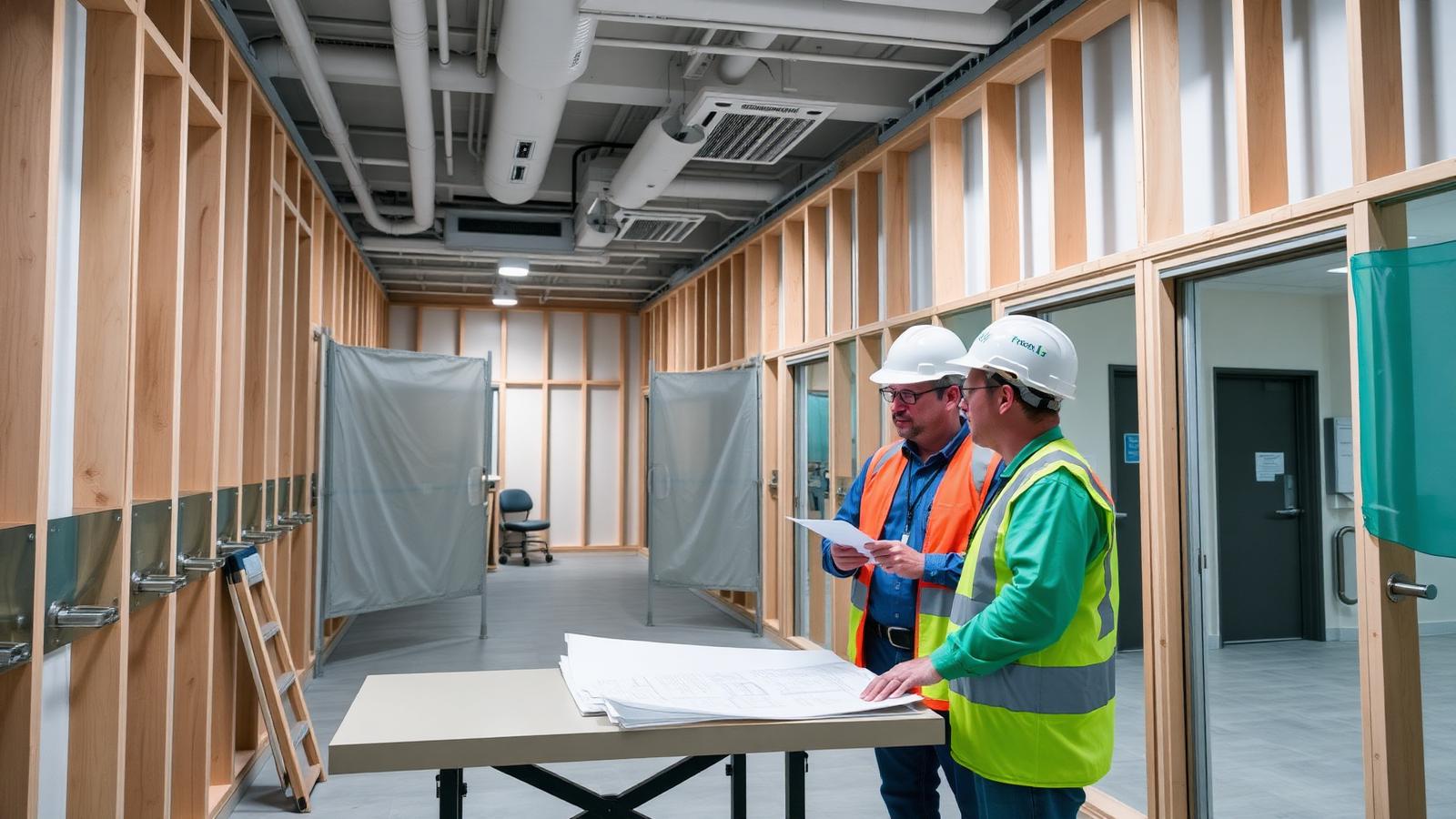
Healthcare construction is the most heavily regulated and operationally sensitive category of commercial construction. A hospital or medical office cannot pause patient care to accommodate a contractor. Infection control protocols are enforceable regulations, not project preferences. State health agency review can add months to permitting. The right healthcare construction project management approach is the difference between a smooth fit-out and a Joint Commission citation.
This guide explains how healthcare construction PM actually works — and what hospital owners should require from their general contractor.
What Makes Healthcare Construction PM Different
Five things separate healthcare from other commercial construction:
- Active facility operations. Most projects happen inside occupied space — patients, families, staff, and equipment continue functioning around the work.
- Infection control (ICRA). Infection Control Risk Assessment dictates barrier construction, negative-air protocols, HEPA filtration, and waste pathways — required before mobilization.
- Life safety (ILSM). Interim Life Safety Measures replace fire/life-safety systems impaired by construction.
- State agency review. OSHPD (now HCAi) in California, and equivalent agencies in other states, review hospital construction documents at multiple stages.
- Patient experience. Noise, vibration, water shutdowns, and odor control are operational issues — not nuisance complaints.
The Healthcare Construction PM Workflow
1. Preconstruction (8–16 weeks)
- Stakeholder mapping: clinical leadership, infection prevention, facilities, biomedical, security
- ICRA classification with the Infection Preventionist (Class I–IV)
- ILSM plan submission to the AHJ and life-safety officer
- Long-lead identification: medical gas equipment, switchgear, imaging shielding, custom casework
- Pre-application meetings with state agency reviewers
- Schedule integration with department operations (OR block, infusion chairs, inpatient census)
2. Design coordination (overlapping)
- MEP coordination with biomedical for equipment loads
- Lead shielding design for imaging
- Medical gas / vacuum routing and shutdown planning
- Acoustical and vibration analysis for adjacent sensitive areas (OR, NICU, imaging)
- Wayfinding and security badge integration
3. Mobilization & barriers
- ICRA barriers installed and inspected before any demo
- Negative-air machines staged and balanced
- HEPA-filtered exhaust routed away from patient corridors
- Anteroom protocols for worker entry/exit
- Daily ICRA monitoring logs
4. Construction in an active facility
- After-hours phasing for noisy or odor-producing work
- Coordinated water, power, and medical gas shutdowns (often weeks of notice)
- Dust monitoring at adjacent patient areas
- Waste pathways segregated from patient/family corridors
- Weekly infection control rounds with the IP and project team
5. Closeout and reactivation
- Terminal cleaning and disinfection
- Air balancing and pressure relationship testing
- ICRA barrier removal sequence
- Final ILSM lift and life-safety system reactivation
- Owner training: medical gas, BMS, emergency power
What Owners Should Require From Their Healthcare GC
- ICRA / ILSM-trained PMs and superintendents — not just paperwork compliance.
- Documented after-hours phasing plans with hospital operations sign-off.
- A dedicated infection control liaison on the project team.
- Weekly ICRA / ILSM compliance reports delivered to the IP and facilities director.
- Pre-task safety plans that include patient-area protocols, not just OSHA topics.
- Closeout deliverables: as-builts, balancing reports, ICRA logs, owner training records, medical gas certifications.
Where Schedule Slips on Healthcare Projects
- Underestimating state agency review duration (4–12 weeks per cycle is normal)
- Late identification of clinical stakeholders → mid-design scope changes
- Long-lead equipment ordered after CDs instead of at DD
- Inadequate after-hours / weekend phasing → noisy work bumped repeatedly
- Owner-supplied medical equipment without delivery and coordination plans
Owner-Side Cost Levers
Healthcare construction is MEP-heavy and equipment-heavy. Cost certainty improves when the owner commits early to:
- Equipment selections (imaging, sterilizers, lab) — drives MEP design
- Phasing plan with clinical leadership
- Brand / wayfinding standards
- A single decision-maker per stakeholder group
Related Reading
- Healthcare compliance for commercial construction
- What does a commercial general contractor do?
- Commercial construction timeline
Bring in a Healthcare-Experienced GC Early
The earlier a healthcare-fluent GC joins the team, the more risk leaves the project. We have delivered ICRA / ILSM-compliant work for hospitals, ambulatory surgery centers, medical office buildings, infusion centers, and assisted-living operators across the Western U.S.
Request a healthcare preconstruction review — we will respond with a project-specific approach within five business days.