
Tenant Improvements 101: Process, Costs, and Timelines
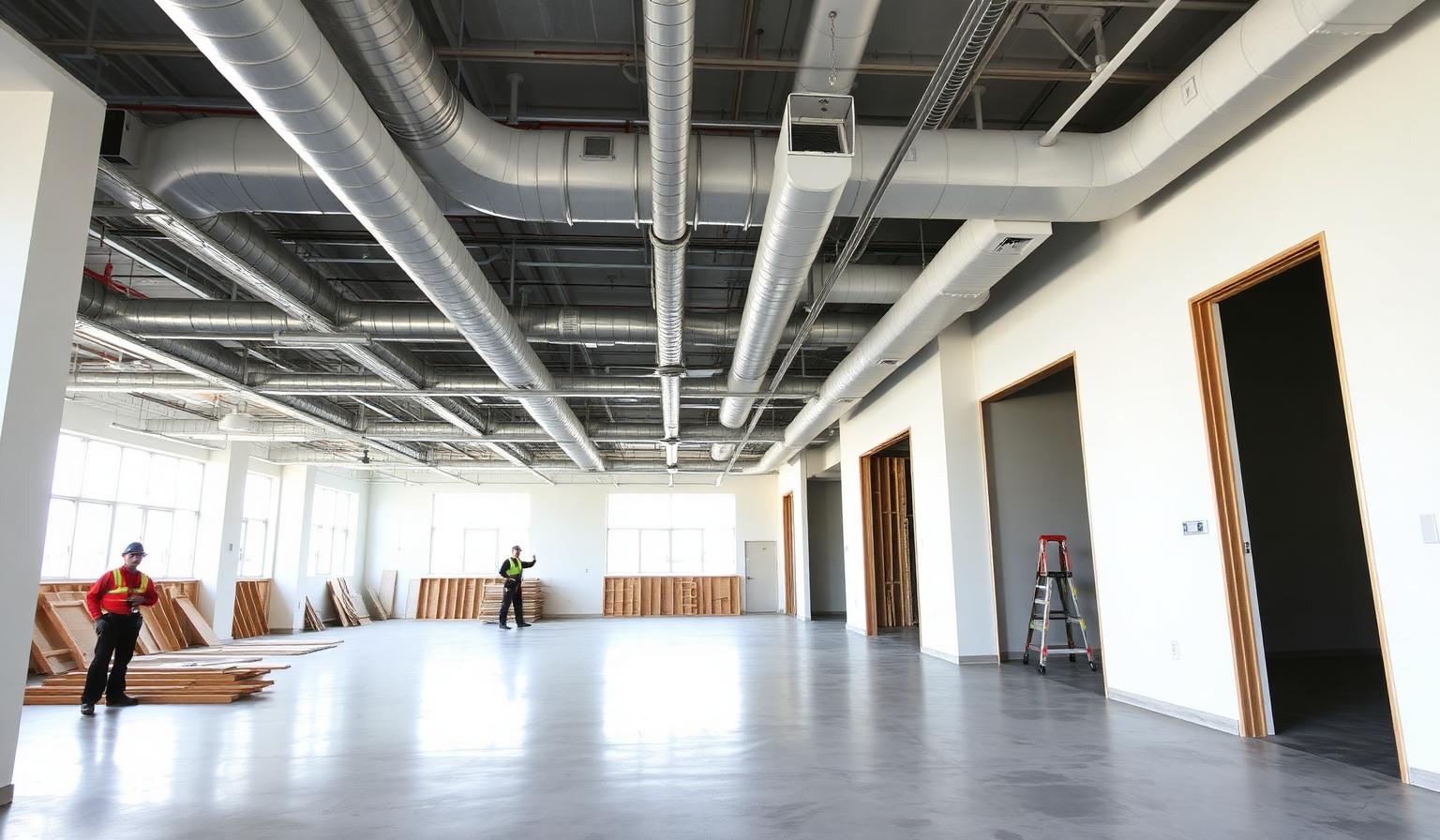
A tenant improvement (TI) — sometimes called a tenant buildout or leasehold improvement — is the construction work that transforms a leased commercial space to fit a specific tenant''s use. It is one of the most common and most misunderstood categories of commercial construction.
Whether you are a tenant signing your first lease, a landlord delivering a vanilla shell, or a broker structuring a deal, here is what you need to know.
What counts as a tenant improvement?
Tenant improvements typically include:
- Demolition of existing partitions and finishes
- New interior walls, doors, and ceilings
- Flooring, paint, and millwork
- Electrical distribution beyond base building
- Plumbing for restrooms, kitchens, or specialty fixtures
- HVAC modifications or supplemental units
- Lighting and lighting controls
- Data, AV, and security rough-in
- ADA upgrades to meet current code
- Signage and storefront modifications
What is not a TI: structural changes, base-building MEP, roof work, and most exterior envelope — those usually live with the landlord under building shell scope.
The tenant improvement process
A typical commercial TI runs through seven phases:
- Programming — tenant and architect define functional needs, headcount, and adjacencies
- Test fits — multiple layouts tested against the leased space to confirm it works
- Design development — finishes, MEP, and details get drawn
- Permit & bid — drawings go to the AHJ and to subcontractors simultaneously
- Permit issuance — typically 4–10 weeks depending on jurisdiction
- Construction — 8–20 weeks for most TIs, longer for medical or food service
- Closeout & occupancy — final inspections, certificate of occupancy, punch list
The mistake most tenants make is underestimating the design and permit phases. Construction is often the shortest piece. Plan for 4–6 months from signed lease to opening day on a standard office or retail TI.
Who pays — and how
Tenant improvements are funded in one of three structures, usually written into the lease as part of the work letter:
Turnkey
Landlord designs and builds the space to the tenant''s specifications, with no out-of-pocket cost to the tenant. Common for credit tenants with strong lease terms. The landlord recovers the cost through rent.
Tenant improvement allowance (TIA)
Landlord contributes a fixed dollar amount per square foot — often $15 to $80/SF depending on market, asset class, and lease term — and the tenant manages the buildout. Any cost above the allowance is the tenant''s. Any savings usually revert to the landlord.
Tenant-funded
The tenant pays the full cost, often in exchange for free rent, lower base rent, or a longer initial lease term. Common for specialty users (medical, food service, fitness) whose buildout cost exceeds what landlords are willing to amortize.
Typical costs per square foot (2026 estimates, western US)
These are working ranges, not quotes. Every project varies by jurisdiction, finish level, and existing conditions.
- Office, second-generation space: $40–$90/SF
- Office, ground-up shell: $80–$160/SF
- Retail, vanilla shell to open box: $60–$140/SF
- Restaurant (limited service): $200–$400/SF
- Restaurant (full service): $300–$650/SF
- Medical / dental: $250–$500/SF
- Lab / life science: $400–$900/SF
Costs are up 25–40% versus pre-2020. Plan accordingly when negotiating TIA.
The three biggest tenant improvement mistakes
1. Signing the lease before pricing the buildout
The most expensive mistake. Always run a budget-grade TI estimate against the proposed space before lease execution. A space that "looks cheap per square foot" with a $20/SF TIA can be far more expensive than a space with a $50/SF TIA if the buildout needs major MEP rework.
2. Treating the work letter as boilerplate
The work letter defines who pays for what — base building vs. tenant, allowance terms, change-order rules, schedule milestones, and damages for landlord delay. Negotiate it like the cost document it is.
3. Picking the wrong general contractor
TIs reward GCs who know the building, the landlord''s property manager, and the jurisdiction. A great ground-up GC may be a poor fit for a fast-moving 6,000 SF interior project. Ask specifically for TI references in the same building class.
How to keep your TI on schedule
- Sign the lease with a clear schedule, not just a possession date
- Engage the contractor at programming, not at bid
- Order long-lead items (gear, glass, custom millwork) the day permits are submitted
- Run weekly OAC meetings starting at lease execution
- Pre-coordinate with the landlord''s property manager on after-hours work, freight elevator scheduling, and tie-ins
When to bring in a commercial general contractor
The earlier the better. A commercial general contractor experienced in tenant improvements can:
- Review proposed spaces and flag costly conditions before lease signing
- Develop preliminary budgets to support TIA negotiation
- Manage the architect, MEP engineers, and permitting in a single workflow
- Deliver a guaranteed maximum price tied to your opening date
If you are evaluating a space or planning a buildout, request a consultation and we will walk through your specific scope, schedule, and budget.
Related services & where we build
Most of the TI projects we deliver run through our commercial tenant improvement services and, when the scope includes design coordination, our design-build general contractor services. For a broader look at the categories we self-perform, see our commercial construction services.
Active TI markets include California, Arizona, Nevada, Oregon, and Washington.